October 10, 2026
Why a Radon Reduction Guarantee Matters for St. Louis Homeowners
By @radonreductionguaranteedesk
The Reality of Radon in St. Louis Homes
After years of working with radon mitigation in St. Louis, I have seen how unpredictable soil gas can be. One house on a block might test at 2.0 pCi/L, and the next door neighbor reads 8.0 or higher. That variability is why every mitigation job needs to end with proof, not promises. A radon reduction guarantee gives homeowners something solid to hold onto when they invest in a system. It is not just marketing talk; it is a commitment that the work will actually lower the radon level to a safe threshold.
St. Louis sits on geology that can produce elevated radon levels, especially in areas with porous soil and limestone features. The EPA action level of 4.0 pCi/L is the benchmark, but many homeowners aim lower once they understand the health risks. A thorough radon testing process is the first step. Without a baseline reading, there is no way to measure success. That is why any credible mitigation plan starts with testing and ends with a post-installation verification that confirms the system is doing its job.
What a Radon Reduction Guarantee Actually Covers
A genuine radon reduction guarantee means the mitigation company stands behind its work. If the system does not bring the radon level below the agreed target, they come back and adjust it at no extra charge. This is not the same as a radon mitigation warranty, which typically covers equipment failures or defects. A guarantee focuses on performance. It says, "We will keep working on this until your air is clean."
I have seen systems that looked great on paper but failed in practice. A sub-slab depressurization setup might be installed with a powerful radon fan, but if the sealing around the slab is incomplete, soil gas finds another path. The radon sealant used around cracks and pipe penetrations has to be applied with care. A guarantee forces the installer to check every detail, because they know they will be back if the numbers do not drop.
Post-Installation Verification Is Non-Negotiable
After the system is in place, the only way to know if it works is to test again. Post-installation verification should include a short-term radon test, usually lasting two to seven days, and sometimes a continuous radon monitor for real-time data. A manometer on the radon vent pipe tells the installer whether the fan is pulling the right vacuum under the slab. If the manometer reading is off, the system is not creating enough negative pressure to capture soil gas before it enters the living space.
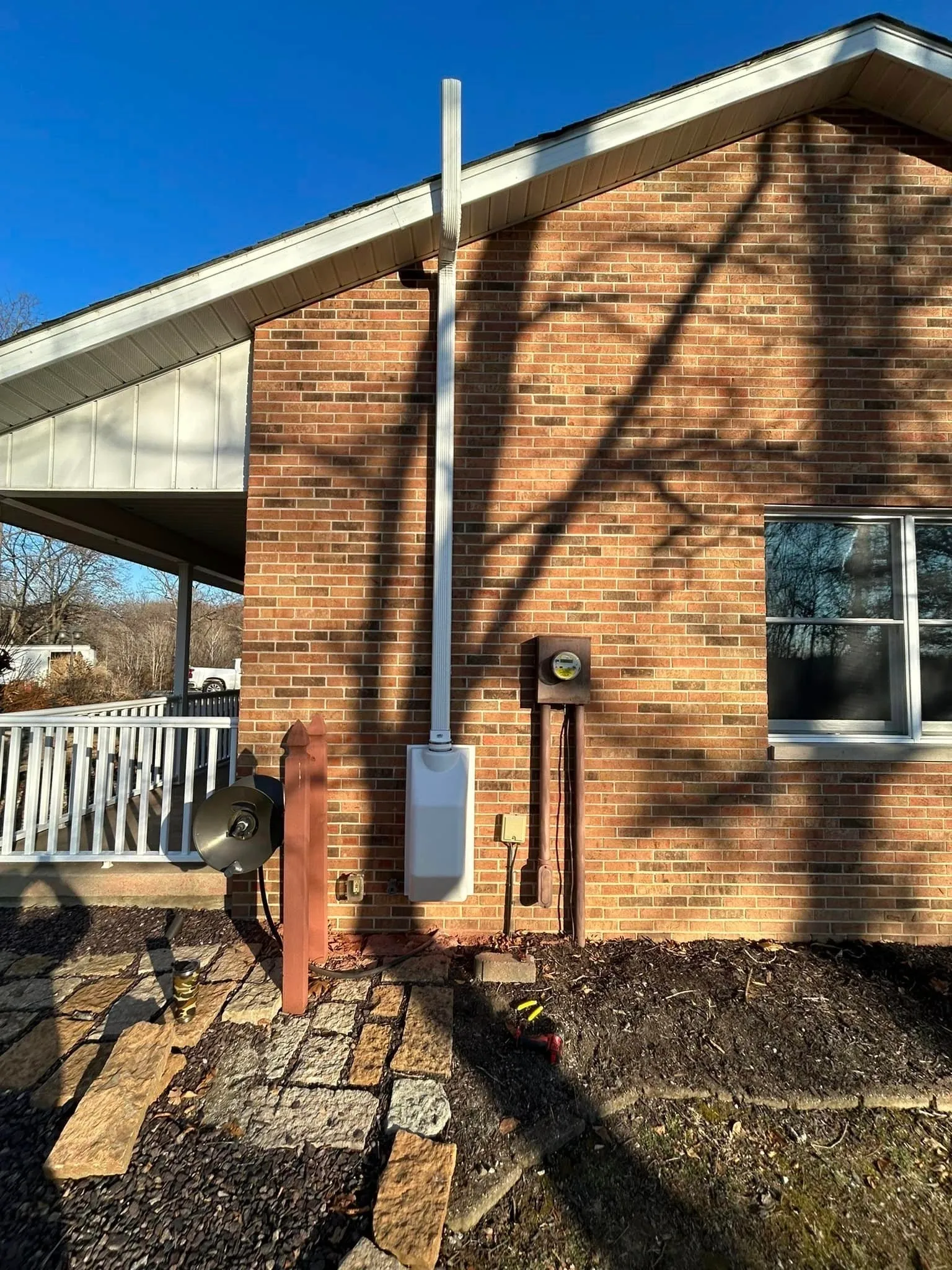
In my experience, a passive radon system might work in some homes, but an active radon system with a dedicated fan is far more reliable in St. Louis clay soils. The radon vent pipe runs from under the slab up through the roof, and the fan creates suction that pulls soil gas away. A radon reduction guarantee usually applies to active systems because they are mechanical and can be tuned. Passive systems depend on natural airflow and stack effect, which are harder to guarantee.
What to Look for in a Radon Mitigation Company
When you are shopping around, ask directly about their radon reduction guarantee. Some companies offer a one-year performance guarantee, others might extend it. Air Sense Environmental, for example, provides a clear guarantee that ties their work to measurable results. That kind of confidence comes from experience with local soil conditions and years of fine-tuning installations.
Here are a few things to check:
- Does the guarantee cover retesting and system adjustments if the radon level stays high?
- Is there a cap on the number of return visits, or is it unlimited until the target is met?
- Does the guarantee require you to use their preferred testing method, or can you use any certified lab?
- Is there a time limit on how long you have to report a problem after installation?
- Does the guarantee transfer to a new homeowner if you sell the house?
These details matter more than the price of the system. A cheap install with no guarantee can cost you more in the long run if the radon level does not drop and you have to hire someone else to fix it.
The Role of Radon-Resistant Construction and Retrofits
New homes in St. Louis can be built with radon-resistant construction techniques that include a gas-permeable layer under the slab, a vapor barrier, and a stub for a future radon vent pipe. Those features are great for prevention, but they do not replace a proper mitigation system if the radon level is already high. For existing homes, retrofitting involves sub-slab depressurization, which is the most effective method I have seen. It works even in basements with finished floors, though the installation is more involved.
A long-term radon test, lasting 90 days or more, gives the most accurate picture of year-round exposure. Short-term tests are useful for a quick snapshot, but seasonal changes in soil moisture and air pressure affect radon entry. If your post-installation verification uses a short-term test, it is wise to follow up with a long-term test later. A good radon reduction guarantee will cover that scenario too, because the goal is lasting safety, not just a passing grade on a three-day test.
Why a Guarantee Builds Trust
Homeowners in St. Louis have enough to worry about without wondering if their radon system is actually working. A radon reduction guarantee removes that uncertainty. It shifts the risk from the homeowner to the installer. That is fair, because the installer controls the design, the materials, and the labor. If they get it wrong, they should fix it.
I remember a job where the initial installation looked perfect. The radon fan hummed, the manometer showed good vacuum, and the pipe was routed cleanly. But the post-installation test still came back at 3.8 pCi/L, just under the EPA action level but not low enough for the homeowner. Under the guarantee, the crew returned, found a small gap around a floor drain, and sealed it with radon sealant. The retest dropped to 1.2. Without a guarantee, that homeowner would have been stuck paying for another visit or living with a borderline result.
Continuous Radon Monitors and Real-Time Data
Some homeowners now use continuous radon monitors that log readings every hour. These devices give a more detailed picture than a single test can. If a system is working well, the monitor should show consistent low numbers, with maybe a small spike during a big storm or when the furnace runs. If the numbers jump around, something is wrong. A company that offers a radon reduction guarantee will usually respect data from a continuous monitor, as long as it is a certified device. That kind of transparency helps everyone.
Soil gas is not predictable, but a well-designed active radon system can handle the variations. The radon reduction guarantee is the installer saying, "We know our system works in St. Louis homes, and we will prove it." That is worth a lot more than a piece of paper with fine print.
Final Thoughts on Choosing a Mitigation Partner
When you are ready to deal with radon, look for a company that treats post-installation verification as seriously as the installation itself. Ask about their radon reduction guarantee in writing. If they hesitate or talk around it, move on. The best companies, like Air Sense Environmental, have been doing this long enough to know that a guarantee protects both the homeowner and their own reputation.
Radon mitigation is not a one-size-fits-all process. Every foundation is different, every soil type behaves differently, and every family deserves air that is safe to breathe. A strong guarantee is the closest thing to a promise you can take to the bank. It says the work is not done until the numbers prove it. And in St. Louis, where radon is a real concern, that kind of assurance makes all the difference.
❧